As an Amazon Associate we earn from qualifying purchases.
Short answer: The Tribit StormBox Micro 3 is worth considering if you want a small speaker that can mount with a strap or stick to a static steel surface, and you value a longer manufacturer-rated runtime than the Micro 2. Tribit lists 24 hours at 50% volume with default EQ, IP68, Bluetooth 6.0, and 5 W maximum USB-C phone output. Its battery, port conditions, and mounting cautions matter: do not expect a fast power bank, and use the strap rather than the magnet for a moving bike. This is a research-based guide, not a ProperlyGeek hands-on test.
As an Amazon Associate, we earn from qualifying purchases.
Contents
- Quick take
- Micro 3 features
- Battery and USB-C charging
- Water rating and connectivity
- Independent review findings
- Upgrade decision
Specifications below are Tribit’s claims; listening and use observations are attributed to their reviewers.
Quick take: Micro 3 or Micro 2?
| Choose the Micro 3 if… | The Micro 2 may suit you better if… |
|---|---|
| You want the longer 24-hour claim under Tribit’s stated condition and a faster stated full recharge. | You specifically want the Micro 2’s up-to-10 W maximum phone output instead of Micro 3’s 5 W maximum. |
| You want a magnetic base for a static metal surface plus a strap for attachment. | You already own a Micro 2 and do not need a magnetic base or the new model’s battery claim. |
| IP68 and a built-in call microphone are priorities. | The exact Micro 2 is available at a price you accept and its simpler feature set fits. |
What is new on the StormBox Micro 3?
Micro 3 is the third-generation speaker in Tribit’s compact, strap-mounted Micro line. Tribit lists a 13 W output, 4,800 mAh battery, Bluetooth 6.0, AAC/SBC support, an app with six presets and a nine-band EQ, a call microphone, TWS stereo pairing, and no AUX input. Its dimensions are about 112 × 108 × 45 mm on the product page and weight is listed as 0.73 lb. It is slightly larger and heavier than Micro 2, so “Micro” describes the series rather than promising a tiny pocket fit for everyone. Tribit’s StormBox Micro 3 page
The practical placement update is the magnetic base. Tribit says magnetic mounting is for static metal surfaces and cautions against dynamic uses such as attaching it to a vehicle because it may detach. Its own guidance says to use the strap for intense activities. For a bicycle ride, a metal cabinet or stationary locker can use the magnet; a moving handlebar calls for the strap, attached securely and checked before riding. The user manual says the strap is designed for poles around 30 mm in diameter and warns that wider poles can cause tearing. Tribit Micro 3 product FAQ · StormBox Micro 3 user manual
Battery and USB-C charging
Tribit’s 24-hour claim is conditional: default EQ at 50% volume under normal-temperature lab testing. Its FAQ adds that music type and volume affect runtime. Tribit lists around two hours to recharge using a certified 5V/3A (15 W) wall charger; a lower-output adapter takes longer. A 15-minute charge is advertised as three hours of playback, but that too is a manufacturer figure and depends on the use conditions. The cable is included; the wall charger is not. Tribit Micro 3 specifications and FAQ
Micro 3’s USB-C port can also provide power out to another device, but the official maximum is 5V/1A (5 W). That is emergency-level phone charging, not a fast-charge bank. The Micro 3 user manual says the speaker can serve as a power bank while its battery is above 20%; Tribit’s FAQ says output is reduced slightly below 20%. This is the Micro 3 condition, not the Micro 2 on/off cutoff. Keep the charging port and cable completely dry; if the speaker has been near water, let the port dry before connecting a cable. No phone-specific recharge result is published, so do not assume it will deliver a set amount of phone battery. Tribit product specs and charging FAQ
This output rating is lower than the Micro 2’s listed up-to-10 W output, even though Micro 3 has a larger rated battery. That distinction matters if phone power is a deciding feature. A larger speaker battery does not mean faster charge-out: Tribit specifies the Micro 3 output at 5 W. Waveform Transmitter’s side-by-side review also flags the lower output and describes it as a slower emergency boost. Micro 2 official listing · Waveform Transmitter review
Water rating, drop claim, and pairing
Tribit gives the Micro 3 an IP68 dust-and-water rating and lists a 1.22 m drop-resistance claim. The page says the IP68 unit should have its rubber port cover tucked tightly in watery or humid conditions. It does not specify an exact immersion depth and duration in the accessible product details. Treat IP68 as the maker’s stated rating, not as a guarantee for any particular pool depth, hot tub, saltwater, repeated impacts, or careless charging. Keep the charging port and cable dry, close the cover, and check the included manual for care instructions. Tribit Micro 3 product page and FAQ
The manual says Micro 3 can connect to up to two Bluetooth devices. For speaker-to-speaker stereo or party mode, Tribit’s FAQ says to use the same model; do not expect a Micro 2 and Micro 3 to form a stereo pair. Bluetooth 6.0 and a stated range of up to 45 m are specification claims; obstacles and the connected phone influence real-world range. It supports AAC and SBC, hands-free calls, and voice assistant access through its built-in microphone. Tribit Micro 3 FAQ and specifications
What independent reviewers found
The reviews do not give one universal verdict. TechRadar tested the Micro 3 for a week and praised its battery, strap/magnet placement options, and clear sound, while noting compression at higher volume and less detail than some rivals. Its reviewer found the rated battery figure fairly accurate under that test setup. Tom’s Guide also liked the battery and app EQ, but reported that some EQ presets compressed the sound. What Hi-Fi’s review was less enthusiastic about its value beside a cheaper rival and noted occasional hardness at the top end and buttons that needed a firm press. These differences reflect distinct listening tests, environments, comparisons, and preferences; ProperlyGeek has not independently tested the speaker. TechRadar · Tom’s Guide · What Hi-Fi?
The review evidence is useful for setting expectations: Micro 3 offers a stronger feature list than Micro 2, but it does not guarantee better sound for every listener or every placement. If sound quality is your main priority, compare the reviewers’ listening notes and consider the alternatives they tested. For a purchase based on mounting, battery, or water rating, the manufacturer’s model-specific instructions are the more direct evidence.
Is the Micro 3 worth upgrading to?
The meaningful Micro 2-to-Micro 3 changes are battery, charging time, mounting, water rating, Bluetooth version, call/mic and interface details—not cross-generation stereo. The following table keeps the two SKUs separate; figures are manufacturer claims and listed conditions.
| Feature | StormBox Micro 2 | StormBox Micro 3 |
|---|---|---|
| Output power | 10 W | 13 W |
| Battery playtime | Up to 12 hours at medium volume | 24 hours at 50% volume, default EQ |
| Full recharge claim | About 2.5–3 hours with standard USB-C charger | About 2 hours with 5V/3A charger |
| Phone charge-out | Up to 10 W via USB-C | 5V/1A maximum via USB-C |
| Water/dust rating | IP67; Tribit says up to 3 ft submersion | IP68; exact depth/time not stated on the product page |
| Bluetooth | 5.3 | 6.0 |
| Mounting | Silicone strap | Magnetic base plus silicone strap |
| Pairing | Two Micro 2 units can pair | Micro 3 pairs with the same model only |
Sources: Micro 2 listing and its manual; Micro 3 listing. The Micro 2 manual’s charge-out cutoff differs by whether its speaker is on or off; the Micro 3 page does not provide the same threshold, so do not carry the old threshold over to the new model.
An existing Micro 2 owner has the clearest reason to upgrade if the 24-hour claim, faster full recharge, magnetic placement on stationary metal, IP68 rating, or built-in call mic solves a real problem. If phone charging is the priority, the Micro 2’s published maximum output is higher. If your Micro 2 still meets your needs, the Micro 3’s new Bluetooth version alone is not a reason to replace it. Because pairing requires identical models, choose two Micro 3 units if your goal is a new matched stereo pair. Tribit Micro 3 FAQ · Waveform Transmitter comparison
For current shopping options, search Amazon for Tribit StormBox Micro 3. Search results do not verify a particular seller or matching model. As an Amazon Associate, we earn from qualifying purchases. Confirm the exact generation, seller, condition, return terms, and current listing details before ordering.
Frequently asked questions
Can the Micro 3 charge a phone?
Yes. Tribit lists USB-C charge-out up to 5V/1A (5 W). That is a limited emergency boost, not a fast charger. Keep the port and cable dry when charging.
Does the Micro 3 stick to a bicycle?
It has a magnetic base, but Tribit says to use that only on static metal surfaces and warns it may detach from a moving vehicle. Use the silicone strap for riding and secure it before moving.
Can the Micro 3 pair with a Micro 2?
Not for speaker-to-speaker TWS. Tribit says Micro 3 pairs with the same model for stereo or party playback. The manual’s allowance for two Bluetooth devices refers to source-device connections, not cross-generation stereo pairing.
Is 24 hours of battery life guaranteed?
No. It is the manufacturer’s rating at 50% volume with default EQ under normal lab temperature. Higher volume, different music, and EQ choices can reduce runtime.
Micro 3 is a practical upgrade for buyers who value its battery claim, magnet-plus-strap mounting, and the newer protection and pairing features. It is less persuasive if you expect a fast phone charger, want to mix generations, or are buying only for a promise of superior sound. Check Tribit’s current Micro 3 listing for the exact product instructions and regional buying details.
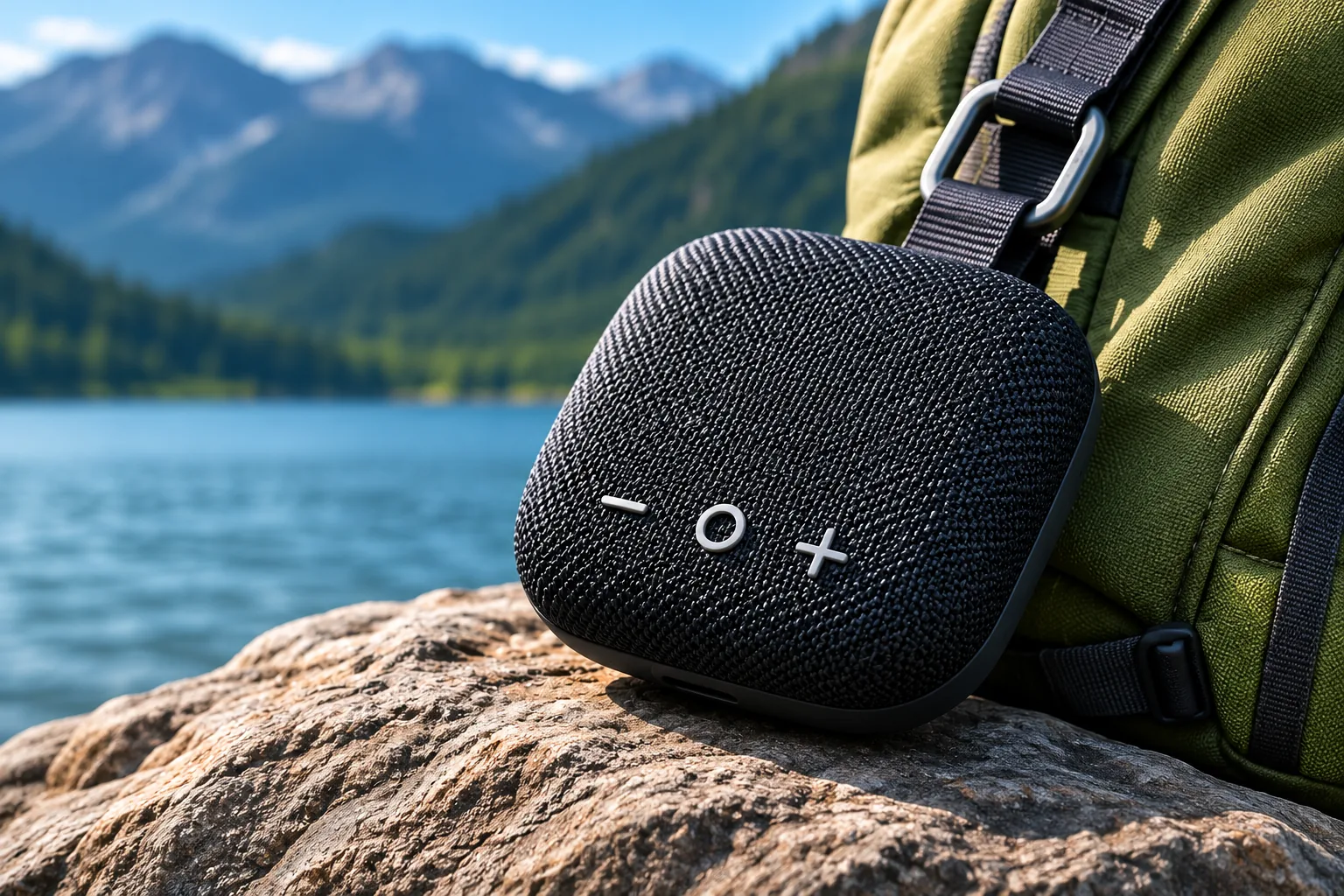
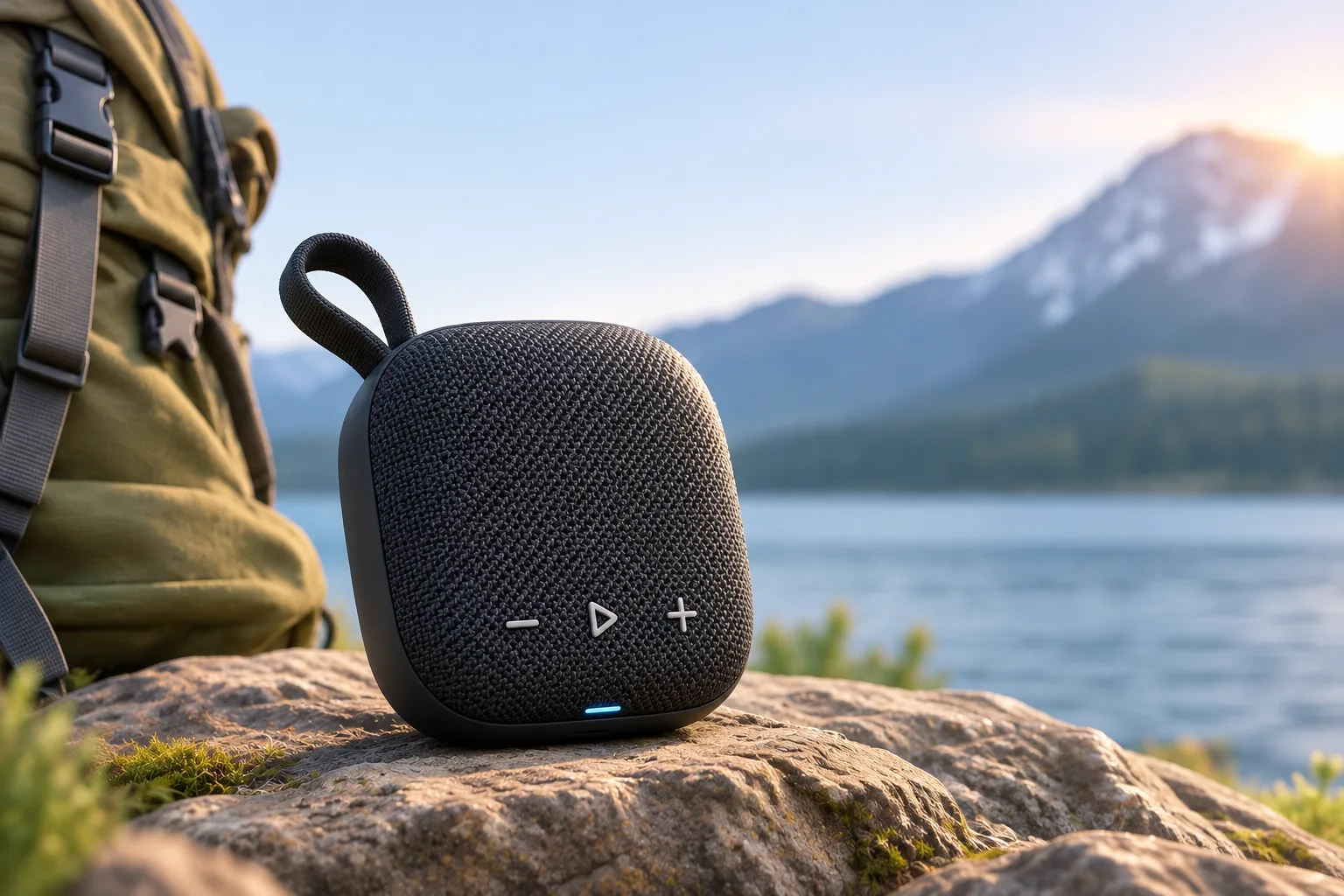
Header image: AI-generated editorial illustration, not a product photograph or test setup.